I choose to write about my grandmother Matilde’s death because it marked me deeply, it changed me, really, and gave me gifts that I am still receiving. These gifts are not only ones I hold close to my heart, but ones I give freely to anyone willing to receive them, like the most precious flowers in my garden. Her manner of dying and the brief, sacred encounter we shared during her final hours continue to touch me—and, through me, others.
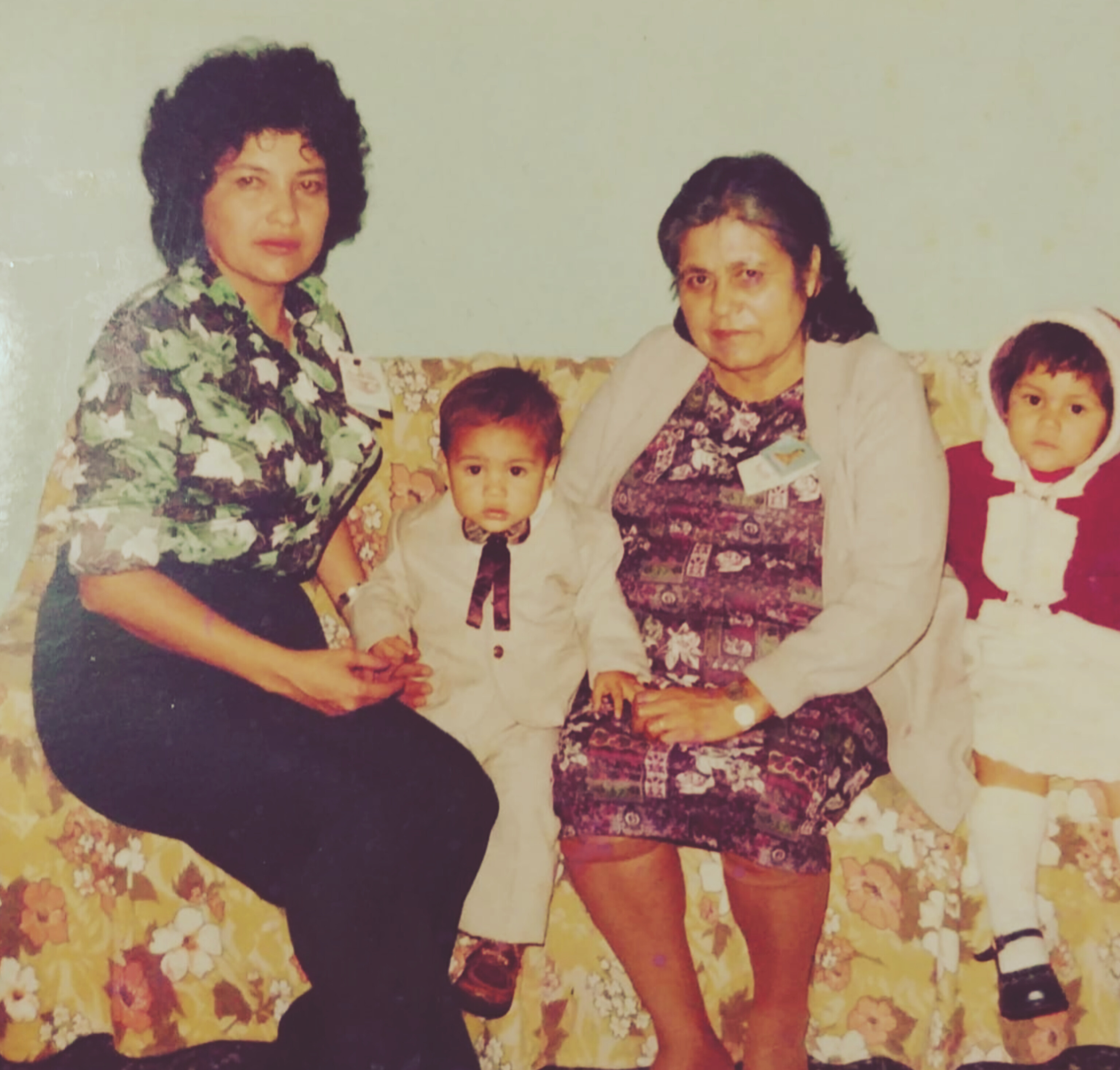
I was a nine-year-old girl visiting Lima, Peru, on the verge of my First Communion. My small family lived four hours south of the city, in a military villa and we had come to my grandmother’s home to visit her and to have my First Communion cake prepared by my aunt Zoila, who was a gifted baker. She was my grandmother’s eldest daughter, a midwife, and the authoritative head of the family. My maternal family has always been led by women, as far as I can remember, by memory and lore.
Dinner had ended, and the house hummed with life. Aunts, uncles, my mother, and the family’s children gathered in the living room, watching television, chatting, laughing while also keeping an eye on my aunt Zoila as she worked on my fabulous cake. She wasn’t a professional baker, but her hands held a craftswoman’s gift. The cakes she made for family celebrations were adorned so beautifully they could have graced the windows of a professional bakery. As a matter of fact, she made my parent’s wedding cake, an architectural masterpiece of a cake, the kind you’d expect to see in the glossy society pages.
As I sat watching television, a sharp, distressed sound broke through the room. My younger aunt Marietta cried out suddenly, and I turned to see all the aunts rushing toward her. I quickly realized their attention was on my grandmother, who was slumping faintly into their arms. Her daughters were fanning her, speaking to her, coaxing her back from the edges of unconsciousness.
Strangely, I don’t remember feeling alarmed. Perhaps I was confident she would recover—she always did. My grandmother suffered from diabetes and what I now suspect, from heart disease; her “heart weakness” something that was whispered and explained away throughout my childhood. Aunt Zoila, always calm and prepared, retrieved a syringe and injected her mother with medicine.
They laid Matilde gently on the long maroon velvet sofa in the living room. She rested on her right side, her hand tucked under her head—a posture I now recognize as reminiscent of Shakyamuni Buddha in his final moments. I didn’t know this then of course but now, the memory fills me with reverence. It reminds me that the act of dying, both mundane and momentous is sacred, a transition infused with quiet holiness.
Around 9 p.m., I was sent to bed upstairs. I fell asleep quickly, only to awaken a few hours later. There were no loud noises, just the murmur of frantic, hushed voices drifting up from the first floor. I slipped quietly from my bed and sat at the top of the staircase, peering down into the living room below.
There she was, still lying in the same position—on her side, hand tucked beneath her head. My grandmother looked so tired, her eyes closed as if she were focused inward on a struggle I could not see. Suddenly, she opened her eyes.
Her gaze found mine instantly. We held that moment between us, long enough to feel its weight but brief enough to remain fleeting—six seconds, perhaps. And then she smiled. It wasn’t a big, bright smile. It was soft, small, and deeply comforting. Even now, I believe she wanted to tell me that I didn’t need to worry, that nothing was so terrible that she couldn’t smile at me.
That moment changed me. Her smile shaped the woman I would become—someone very curious and fascinated with the death process. It also gave me the unbreakable faith that dying is not an ending but a transition: a change in consciousness, a transfer to another state of being. Of this I hold not a shred of doubt.
Satisfied by what I had seen, I returned to bed and drifted back to sleep, comforted. I woke to the piercing sound of my aunt Zoila’s wailing. It was high, deep, and raw with pain, the kind of sound that never leaves your cells. The kind of sound we all hold in our DNA. We all know how it feels, even if we have never experienced this kind of loss. Instinctively, I returned to my secret place on the stairs to find out what was happening.
Below, I saw my grandmother still lying on the sofa, peaceful and unmoving. My aunt was crying, clutching her face as though trying to push the grief back into herself. Beside her sat my grandmother’s old and trusted family doctor, silent and solemn, bearing witness to this moment of loss.
I didn’t yet know she had passed.
Eventually, my uncle Lalo, just a young man of 22, came to see me. He told me softly that my grandmother had died. I hugged him tightly and cried. When he asked why, I remember saying, “I don’t want my mom to die.” But in truth, I was crying for my grandmother. Her death filled me with an ache I couldn’t fully name. I now know that to a child, death is even more mysterious and confusing, posing a grave danger upon all in the house.
The next day, the house was a flurry of activity. The living room was cleared of furniture, mirrors and decorations, replaced with the solemn presence of her coffin. Four tall pillars surrounded it, familiar to me from the funeral homes we passed in the streets.
I didn’t approach the coffin, which I somewhat regret to this day. Instead, I wandered into the patio, where people gathered in small clusters, speaking softly. My aunt Lucha, who was also my Godmother, her face puffy from tears, was eating crackers with butter and drinking coffee. I saw adults smiling at me, their efforts to comfort me kind but fleeting.
Upstairs, my mother ironed clothes and didn’t stop doing things. She cried quietly, from time to time, explaining to me that she didn’t want to cry downstairs, so she was taking breaks in the guest bedroom upstairs. My mother was a proud woman, a figure of strength in our family, and I understood that she didn’t want to appear vulnerable among her siblings, even at my young age.
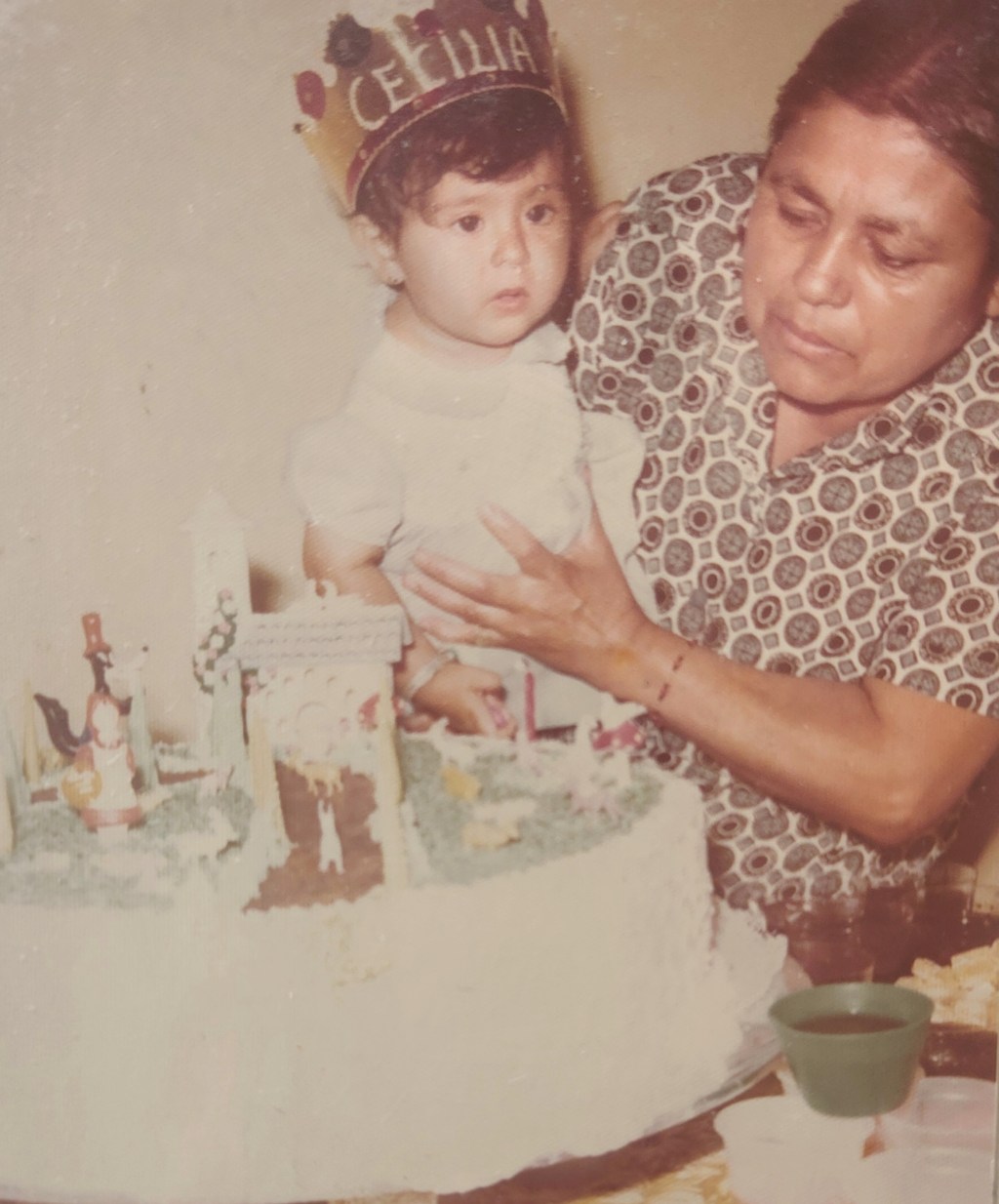
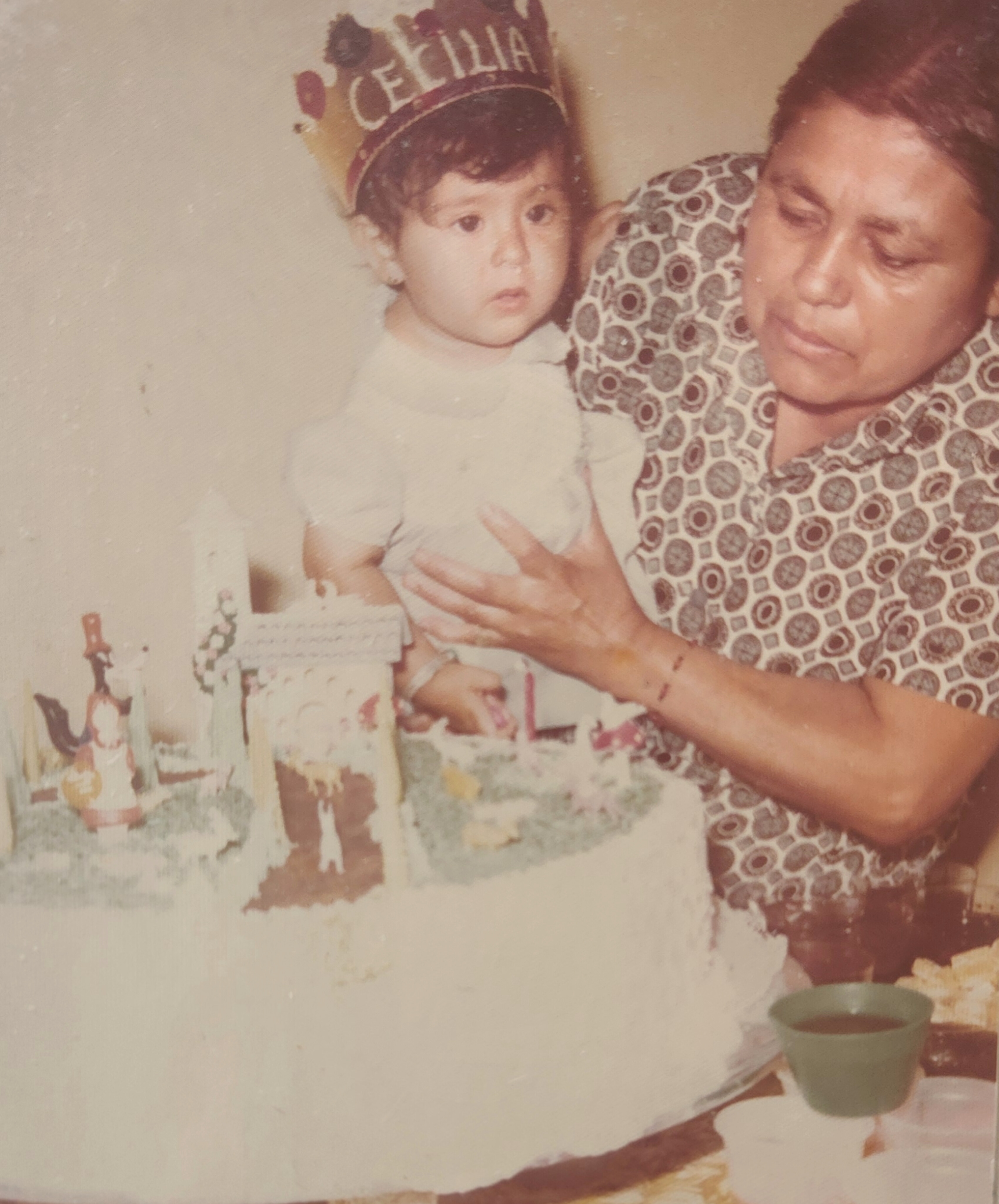
As is tradition in my country, the children were sent away during the wake and funeral. I stayed at my aunt Lucha’s home, babysat by her teenage daughter and cousin of mine. The days after her death blur in my memory. We eventually returned to our town for my First Communion, celebrating with the cake my aunt Zoila had been icing the night my grandmother died. The cake was hurrily finished and lackluster. I now suspect that someone else had finished decorating it.
I know my aunt never made a cake again. after that. Perhaps it was avoidance, or perhaps it was the weight of grief tied to that night. Either way, the loss of her craft remains a small, lingering sadness in the memory of that time.
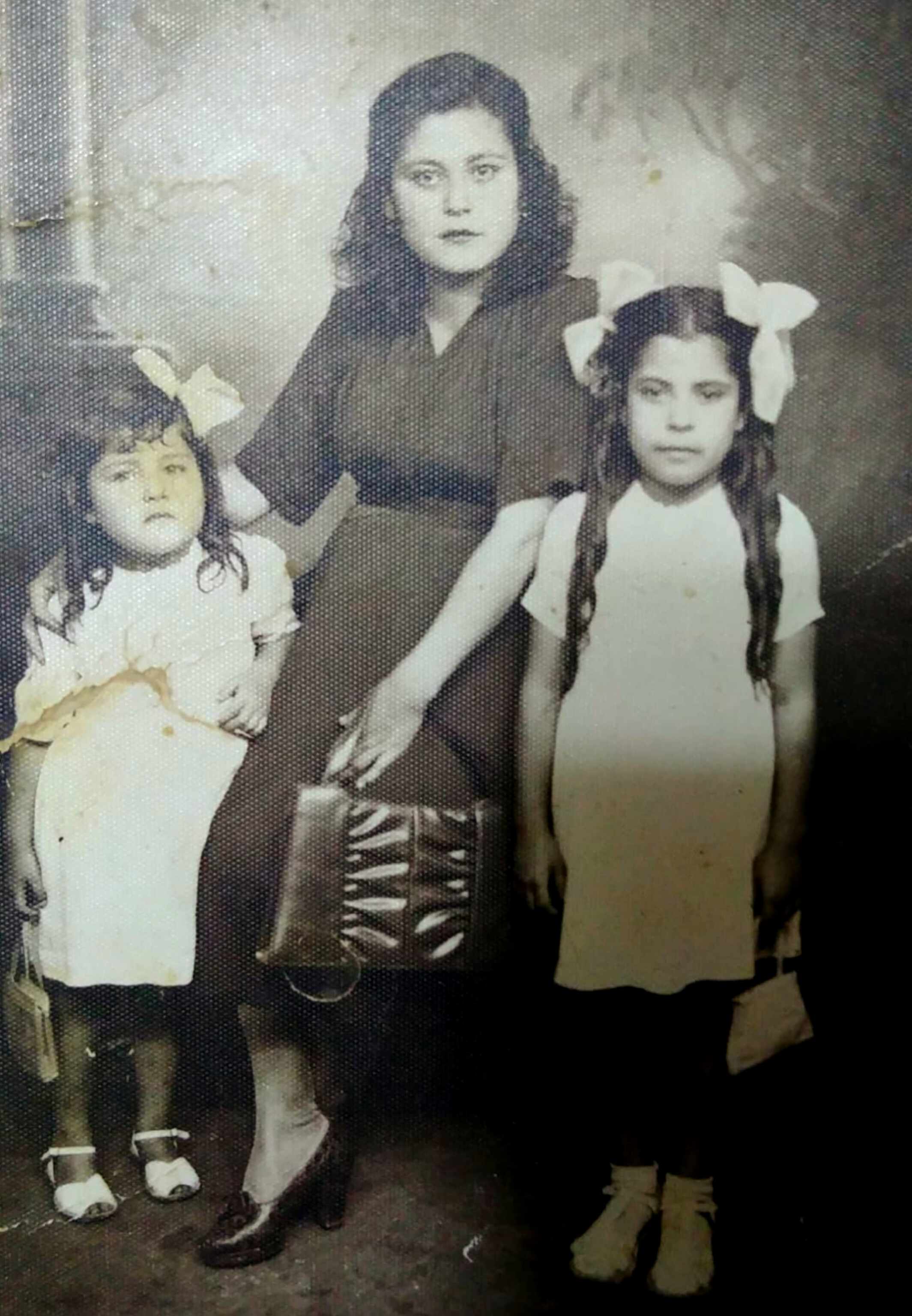
This is all I remember of my grandmother’s death and the days that followed. I wish i could remember more. But even now, after over 40 years, her passing feels very sacred to me, a moment suspended in time that taught me to see death not as an end, but as a profound and holy transformation. I carry that moment in my heart, nestled in the crown of precious jewels of wisdom that life and people have bestowed upon me. And I know, with fierce, unwavering satisfaction, that when my own time comes, my grandmother Matilde will be there to usher me through that dying threshold. I know this with every cell in my body. And I can’t wait to rejoice in the quiet, wild delight of being right, “Oh yes, I was right!” I will tell myself perhaps when I see her again.


 Ana Montero Psychotherapy & Trauma Healing
Leave a comment